Stag Beetle Bite: Symptoms, Danger & Treatment (2026)
Is a stag beetle bite dangerous? Despite jaws that look like they could take off a finger, stag beetles are not venomous, and their long mandibles work against them mechanically — the extra length actually cuts down on the force delivered at the biting teeth. Most people who get pinched feel a sharp jolt, see a small red mark, and are back to normal within a day or two.
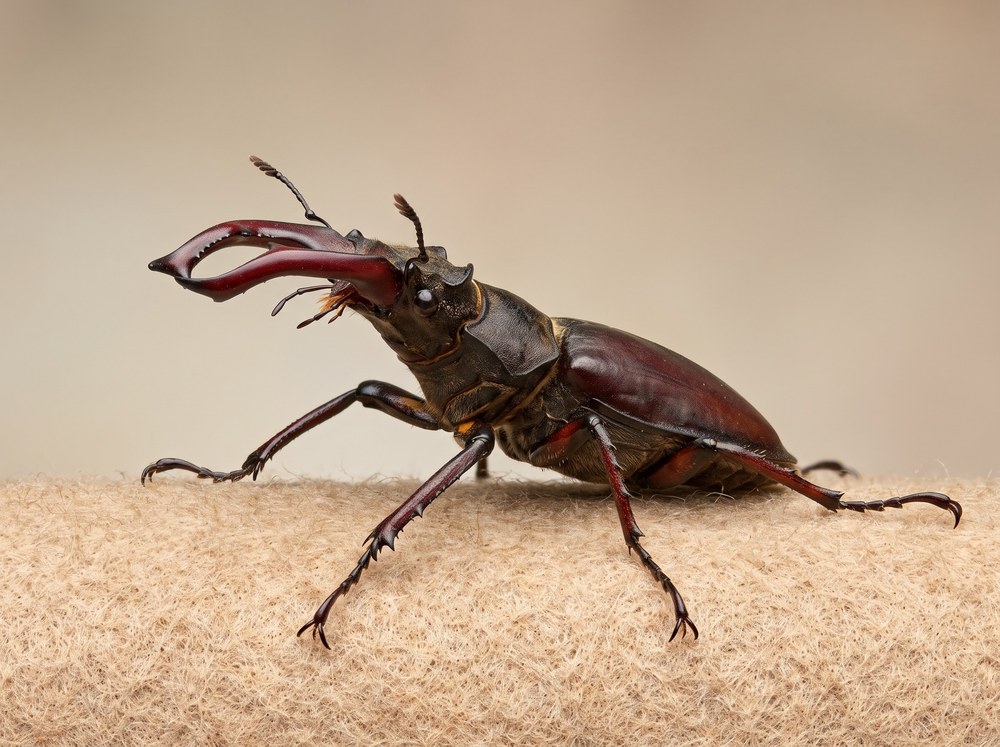
What a stag beetle bite looks like
The sensation is immediate, not delayed. A stag beetle bite feels like a sharp, sudden pinch the moment the mandibles close, then the pain drops off quickly once the beetle releases or is gently removed. There is no slow-building burn and no numbness beforehand — you know right away that something has clamped down.
Visually, most bites leave only a small red mark, sometimes with two faint indentations where the mandible teeth pressed into the skin. Mild swelling can develop around the mark over the next hour, but it is usually limited to a small area rather than spreading. The skin rarely breaks; when it does, it is typically just a shallow scrape rather than a deep puncture.
A distinctive pattern is uncommon. Most bites are just a single pinch mark, though if a female clamps down and twists — females have shorter, stronger jaws than males — the mark can look more defined, occasionally with a slightly bruised or double-pinch appearance. There is no bull's-eye rash, no blister, and no halo associated with a genuine stag beetle bite.
People frequently misidentify the cause at this stage. If you're not certain a beetle mandible made the mark, it helps to identify a stag beetle bite with the BugKnow app before assuming it's something else, since a handful of other garden beetles leave marks that look superficially similar.
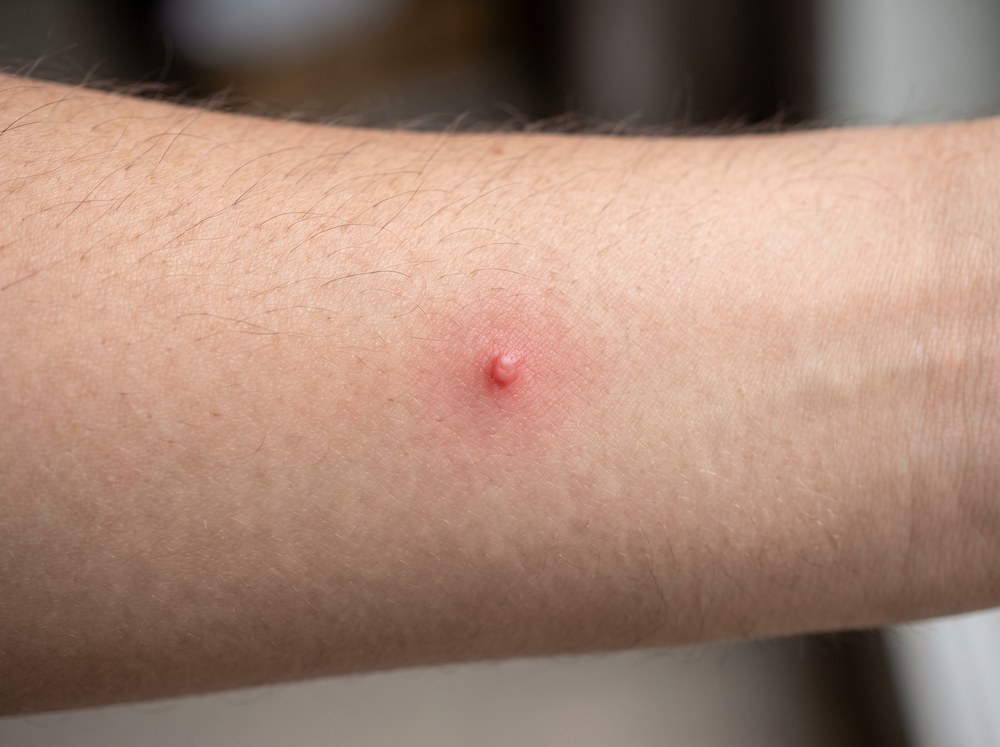
A typical stag beetle pinch: a small red mark, occasionally with two faint points, and no blister or rash.
Bite Symptom Checker
Check every symptom you're currently experiencing. Get a plain-English risk read.
Is a stag beetle bite dangerous?
For nearly everyone, no. The vast majority of stag beetle bites resolve on their own within a couple of days, leaving nothing behind but a fading red mark. Stag beetles carry no venom, and entomologists who study the species consistently describe the bite as mild and harmless despite its intimidating source.
The rare complication worth watching for is secondary infection, which can happen if the skin actually breaks and bacteria get in — this is uncommon with a stag beetle's shallow pinch, but it's the reason ongoing redness or pus after a couple of days deserves attention rather than a shrug. There are no documented fatalities tied to a stag beetle bite.
Risk is slightly higher for young children, who may grab a beetle out of curiosity and get pinched on a finger, and for anyone with a known allergy to insect bites in general, since any bite can occasionally trigger a broader reaction in a sensitized person. People on blood thinners may notice a small bite bruises more than usual.
Bottom line: keep an eye on the area for about 48 hours. If it stays small, mildly red, and calms down, that's the expected pattern. If swelling keeps growing, pus appears, or you develop a fever, escalate to medical care rather than waiting it out.
Wondering how serious yours actually is?
Run the Symptom CheckerStag beetle bite symptom timeline
Hours 0–2. The pinch itself is sharp and immediate. A small red mark appears right away, sometimes with faint indentations from the mandible teeth, and mild throbbing may last 15–30 minutes.
Hours 2–8. Any swelling that's going to develop usually shows up in this window, staying localized to a small area around the mark. Tenderness may persist but should not be spreading outward.
Day 1–2. Redness typically starts to fade and tenderness eases. A light bruise-like discoloration can linger if the pinch was firm, particularly from a female stag beetle's stronger bite.
Day 3–7. Most bites are fully resolved by this point, with no visible trace left. If the area is still worsening, growing redder, or newly painful at day 3 or beyond, that's outside the normal pattern and it's time to seek medical care.
Which Bug Bit Me?
Not sure it was a stag beetle? Answer three questions and we'll narrow the list.
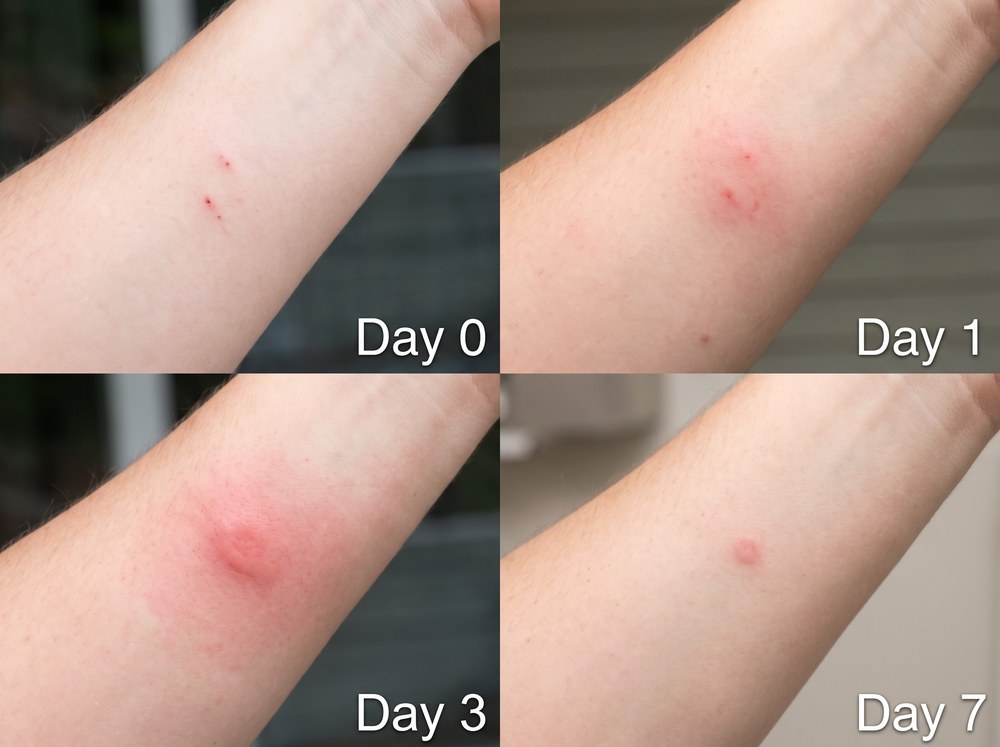
Stag beetle pinch (left) vs. a blister beetle chemical burn (right) — the burn develops later and blisters, the pinch doesn't.
For a deeper visual reference than three dropdown menus can offer, the illustrated stag beetle identification guide from Insectio walks through every look-alike species in detail.
Treatment
Wash and elevate. Clean the bite with soap and water as soon as possible, then keep the hand or limb elevated if any swelling starts to develop.
Cool, don't heat. A cold compress for 10–15 minutes reduces pain and swelling. Cold is the safer general-purpose choice for a mechanical pinch like this, unlike some venomous stings where heat is preferred.
OTC support. An over-the-counter pain reliever handles lingering soreness, and an antihistamine or hydrocortisone cream can calm any itching around the mark.
Watch, don't wrap. Leave the area uncovered so you can monitor it rather than sealing it under a bandage. If the mark doesn't match what you'd expect from a beetle at all, tools built to identify picture of bug can help confirm the source before you treat it as something else. Watch for spreading redness or pus over the next 48 hours as your red-flag trigger.
Prevention
Most bites happen during handling, so the simplest fix is to avoid picking stag beetles up with bare hands. If you need to move one — off a patio or out of a pool, for instance — use gloves or gently guide it onto a piece of cardboard instead of grabbing it directly.
Supervise young children around any large beetle, since curiosity is the most common reason for a pinch. Stag beetles are drawn to rotting wood, tree stumps, and log piles, so if you're finding several around a specific spot in the yard, that's usually where they're breeding rather than a sign of a problem to solve. If you've spotted more than one in your home, a full inspection is warranted.
Not sure if this needs urgent care or just an ice pack?
Walk Through the Decision TreeShould You See a Doctor?
A short decision tree based on CDC and Mayo Clinic guidance.
1 / 3 Is there swelling of the face, lips, or tongue, or any difficulty breathing?
2 / 3 Has the skin broken and started oozing pus, or do you see red streaking spreading from the bite?
3 / 3 Has the redness or swelling been getting steadily worse for more than 48 hours?
Frequently asked questions
Can a stag beetle bite hurt you?
Yes, but usually only in the sense of a sharp, momentary pinch. Stag beetles have surprisingly strong jaw muscles despite their long mandibles, so a bite can sting and leave a small red mark. It rarely breaks the skin and almost never causes lasting harm. Most people describe it as similar to a firm pinch rather than a true wound.
Are stag beetle bites venomous or poisonous?
No. Stag beetles do not produce venom and their bite is purely mechanical, from mandible pressure alone. There is no toxin injected and no chemical burn like the one blister beetles cause. Any redness or swelling comes from the physical pinch itself, not from a poison, and it typically settles down within a day or two.
Why do female stag beetles bite harder than males?
Male stag beetles have oversized mandibles built for wrestling rivals, not for generating crushing force, and those long jaws actually reduce bite pressure at the tip. Females have shorter, more compact mandibles used for digging and cutting wood, which lets them apply more force per bite. That is why a female's pinch is usually the more noticeable one.
How long does a stag beetle bite take to heal?
Most stag beetle bites resolve within a few days with no lasting mark. Mild redness or tenderness typically fades within 24 to 48 hours, and symptoms lasting much beyond that are uncommon. If the skin broke, allow a little more time and keep the area clean while it closes, watching for any signs of infection.
Are stag beetles dangerous to children or pets?
Generally no. Stag beetles are not aggressive and will not seek out a child or pet to bite; a pinch only happens if the beetle is grabbed, restrained, or sniffed too closely by a curious dog. According to the University of Minnesota Extension, the species is beneficial and does not harm people. Supervising small children around any large beetle is still a sensible precaution.
How do I tell a stag beetle bite from a blister beetle burn?
A stag beetle bite looks like a small pinch mark, sometimes with two faint points where the mandible teeth pressed in, and it hurts immediately. A blister beetle reaction looks very different: a chemical burn that develops into a fluid-filled blister hours after contact, often without an immediate sharp pain. If you see delayed blistering rather than an instant pinch, blister beetle exposure is more likely.
What should I do if a stag beetle won't let go?
Stay calm and avoid yanking your hand away or shaking the beetle off, since sudden movement can tear the skin. Gently support the beetle's body and slowly ease the mandibles open, or lower your hand near a stable surface so it has somewhere else to grip. Beetles typically release on their own within seconds once they no longer feel trapped.
When should I see a doctor for a beetle bite?
See a doctor if the bite site develops spreading redness, red streaking, pus, or a fever, or if swelling reaches your face, lips, or throat, or breathing feels affected. Those signs point to infection or an allergic reaction rather than a typical mechanical pinch. Plain redness and tenderness that stay mild and fade over a couple of days do not usually need medical attention.
Take 30 seconds to check your bite now.
Check My Symptoms